


Navigating the River Trent by canal boat requires accurate tidal calculations, and getting through Keadby Lock…
The River Trent
The River Trent is the third longest river in the UK, starting in Staffordshire and, unusually, flowing north to the Humber. It’s notorious for flooding, even changing course, a fact recognised as far back as Shakespeare’s Henry IV Part 1. Those versed in Romano-British suspect the word ‘Trent’ means “strong flooding”.
For the average boater, the main concern is tides. Timing a passage southwards must be done on the flood, when the tide comes in from the Humber and runs south. This is why the engineering problems at Keadby Lock are so crucial.
Tides
Before we continue with our proposed strategy, let’s have a quick look at tides. (It’s like being back at sailing school!)
Most of us know that Earth’s tides are influenced by the gravitational pull of the Moon.
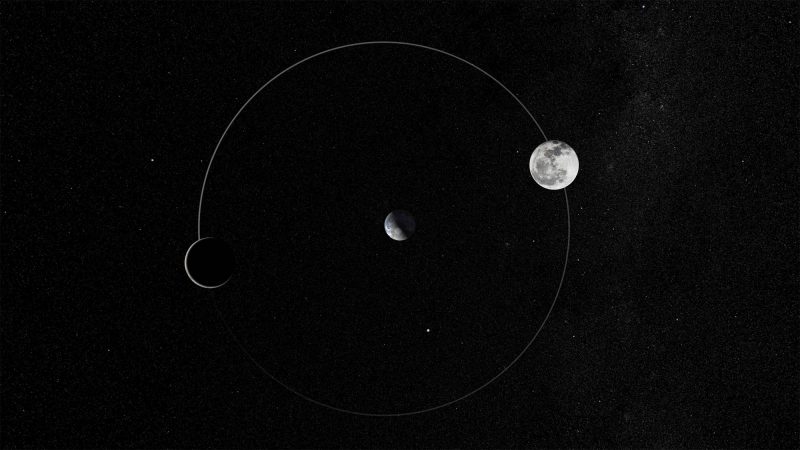
The Moon completes one orbit of Earth over 28 days, during which time it affects the tides differently:
- A full moon and a new moon occur when the Moon, Earth, and Sun are aligned: a full moon when the Moon is behind the Earth, and a new moon when it’s in front of the Earth.
- In these positions, its gravitational pull is strongest, and the variation between low and high tide is greatest. These are known as spring tides,
When the moon is on either side of the Earth, and you see a half-moon, the gravitational pull isn’t as strong. These are called neap tides, and they don’t vary as much.

The time between average tides is usually around six hours.
But not only do tide times change every day, so does the length of the ebb and flow. If you’re looking to catch a turning tide, you must study tide tables to know when to depart.
Uesful links
Boating Association
Try the Trent
Fund Britain’s Waterways
In an ideal world, we would like to leave Keadby at the beginning of the flood tide. In most coastal locations, this would mean running for six hours to reach our destination.
But things aren’t that simple on the Trent.
Currently, the flood tide is only four hours, while the ebb is eight. And due to problems at Keadby Lock, we can only leave one hour before high tide instead of four.
After high tide, the flow direction reverses, so we need to avoid slogging against it.
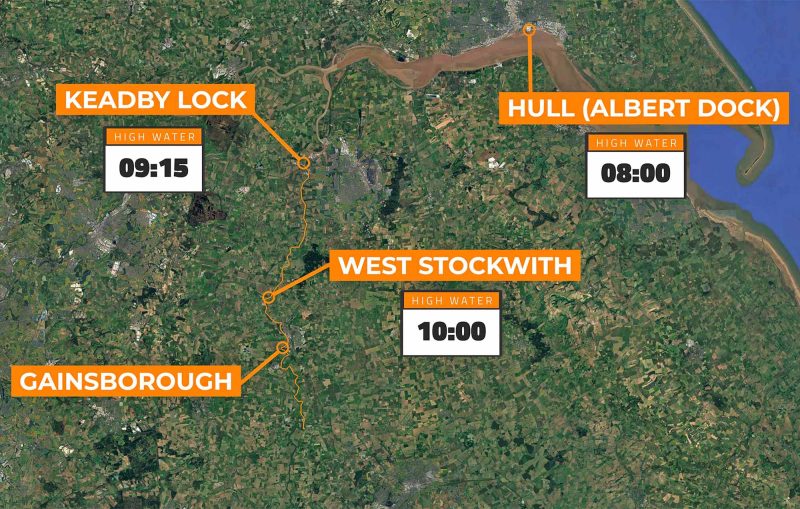
You’d think this gives us only an hour to reach our destination, but high tide comes later the farther upstream you go. If high tide at Hull Albert Dock is 8am, it will be high tide at Keadby at 9.15am, and high tide at West Stockwith at 10am and so on. Leaving one hour before high tide at Keadby means we have two hours to get to West Stockwith before the tide turns, and a little more time to get to Gainsborough, our first stop.
Our idea is to arrive at Gainsborough just after the tide has turned. It’ll be easier to moor against the pontoon going against the flow than running with it.
All of this is hypothetical, of course, unless we can get those spare parts. So, in the meantime, here’s some of Jamie’s Infrared (IR) photography. See if you can spot the deer…
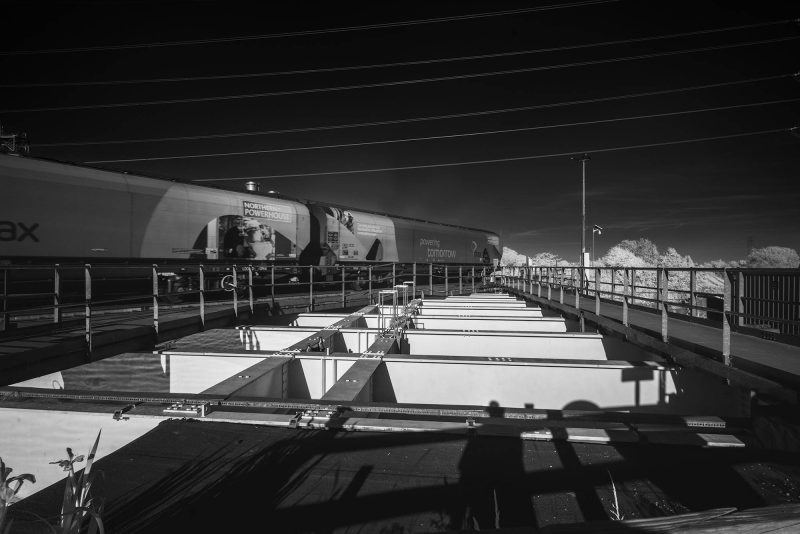
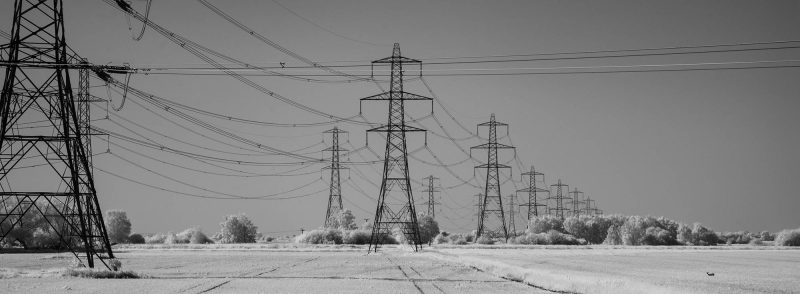

If you like our content and would like to support us, we will give you ad-free access to our videos before they go live to the public, discounts in our shop, access to Jamie’s iconic full-res photographs, and supporter-only blog posts. Click our ugly mugs for more info!

Enjoyed your short tutorial on the tides. Looking forward to your next blog
as we are “landlocked” here in Louisiana due to the unusual constant rain and thunderstorms we are experiencing this year. Our normal summer heat and humidity only adds to the discomfort. Hoping July will bring more stable weather.
Safe voyage on the Trent!
Ann
Thanks, Ann. Hopefully you’ll have seen we had a successful trip down The Trent. Next up, however, is the infamous Glory Hole, and then a crossing out into the open sea! Hope you are keeping well.