We have to get to Boston in four days to make our window to cross The Wash, so we need to push on down the River Witham through the weed and the wildlife.
Once again, it’s a question of what weeds we will encounter and will we get through?
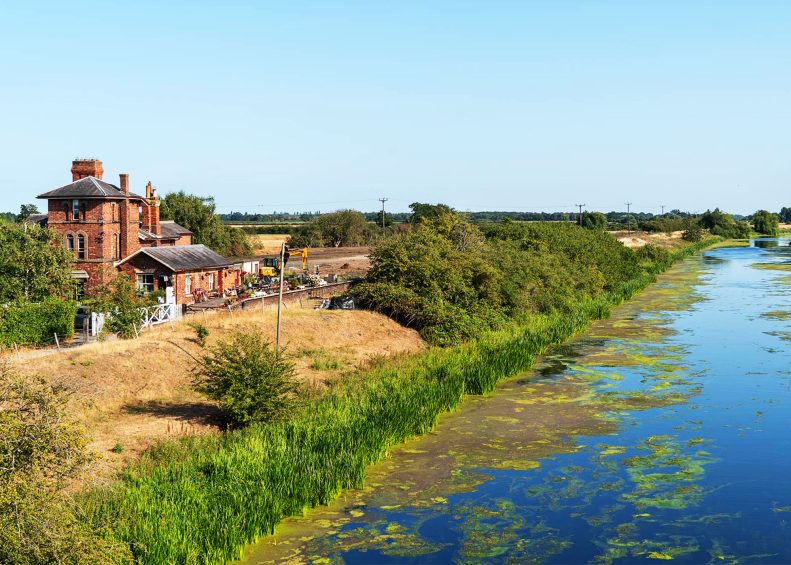
The River Witham continued to be a revelation now that the worst of the weeds were behind us. Stretching long and straight, darters, cormorants and grebes fed on its fish, and ducks, geese and swans nibbled in the water beside its banks.
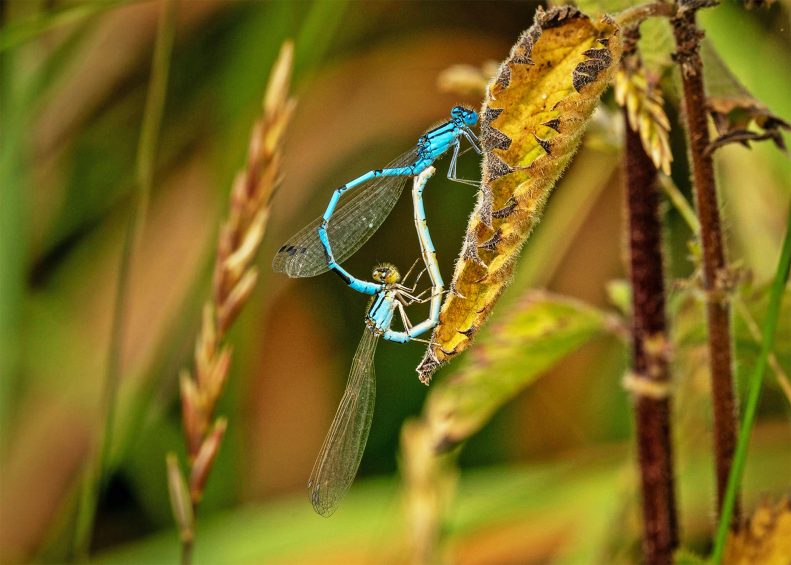
The wildlife kept coming: insects dotted the reeds with colour, and one of the UK’s most endangered species, the water vole, swam across our bow just before we hit Boston.
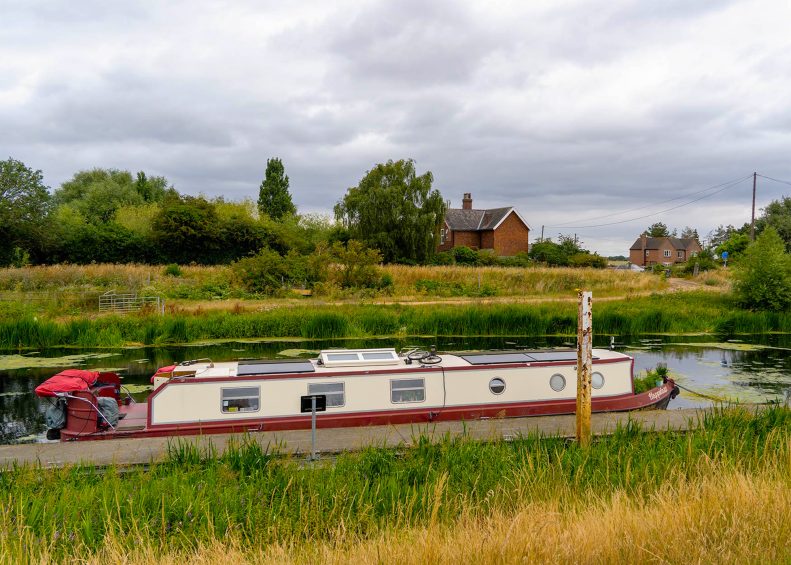
Plenty of CRT moorings are on the Witham, so we never had to worry about finding somewhere to stay overnight. In fact, we were often on our own.
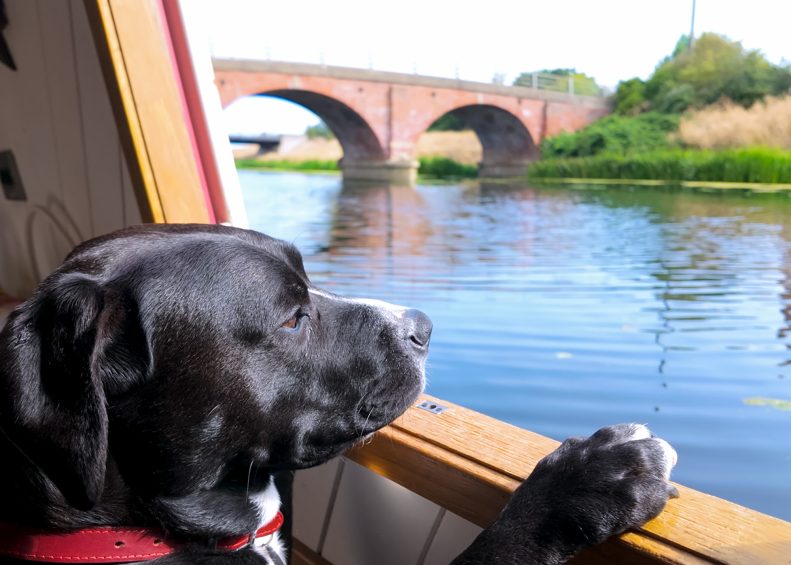
In 1815, renowned civil engineer John Rennie built this beautiful red-brick bridge to replace an earlier version that had collapsed when the river was dredged. Rennie was prolific, designing, among others, London’s Waterloo and Southwark Bridges. His projects also included naval structures, like the Bell Rock Lighthouse and Plymouth Breakwater.
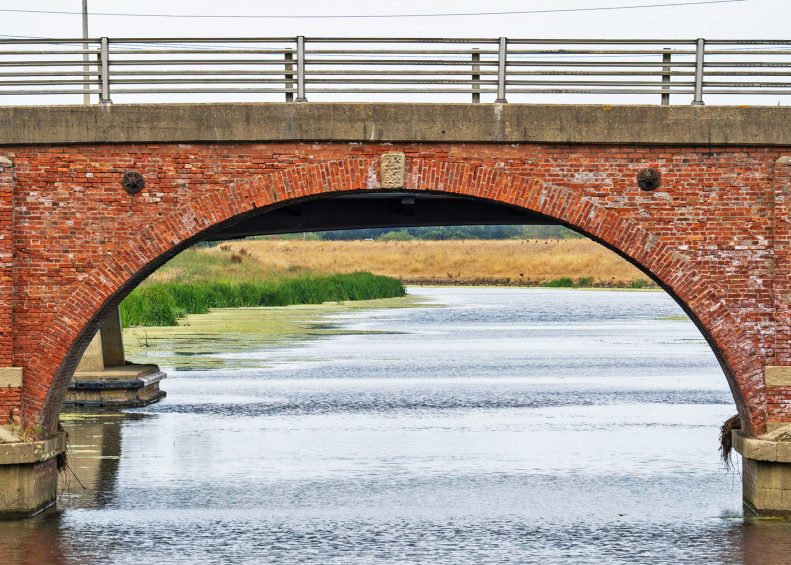
Eventually, in 1992, a functional road bridge was built to handle modern traffic, and divert it from Rennie’s elegant example of early Victorian engineering. His bridge is now a dead end, and serves as a pretty place to stroll across and fish from.
Boston
Finally we arrived in Boston, and found a CRT mooring right in the middle of the town. It could not have been more useful.
Boston, Lincolnshire, is an historic market town and former major medieval port from which, in 1630, local Puritans sailed to North America and established Boston, Massachusetts. “Hidden gem” is one of those overworked clichés you see everywhere in travel writing, but in the case of Boston, it’s true.
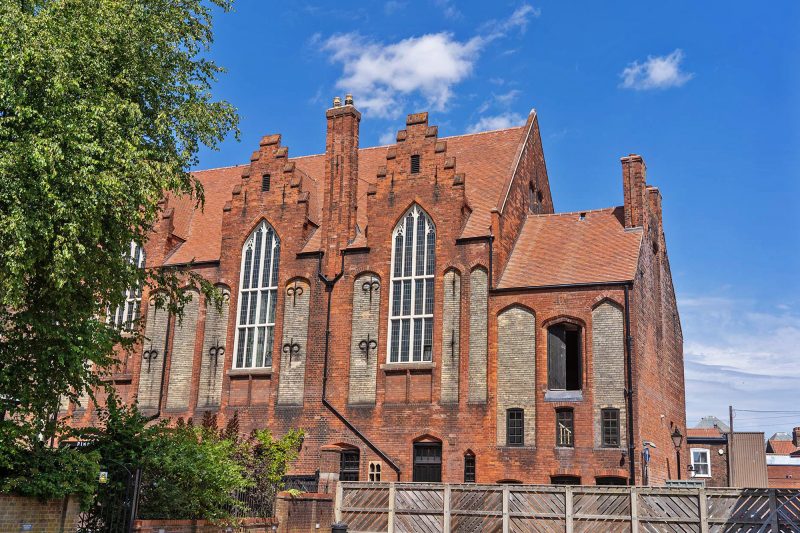
It’s a sleepy place these days, but back in the 13th century Boston was the second wealthiest port in England, London being the first. In the 14th century, it continued to build on its trading status, becoming a “Staple Port” with exclusive rights to tax and inspect wool before export. By 1545, Henry VIII granted Boston its official charter to become a borough.
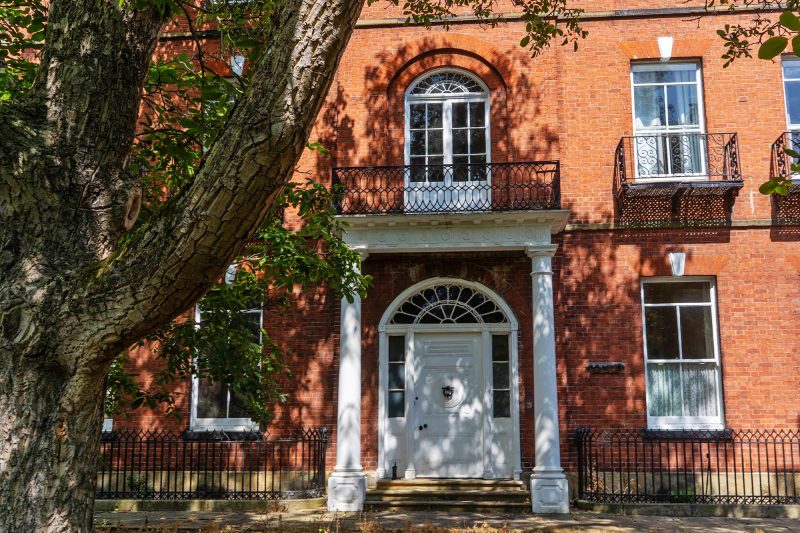
With all that money flowing in throughout the Middle Ages, Boston’s remarkable architecture sprang up. St Mary’s Guildhall was one of the county’s earliest brick structures, and the still-active market square has hosted trade since the 12th Century (the earliest historic record of a fair is in 1132).
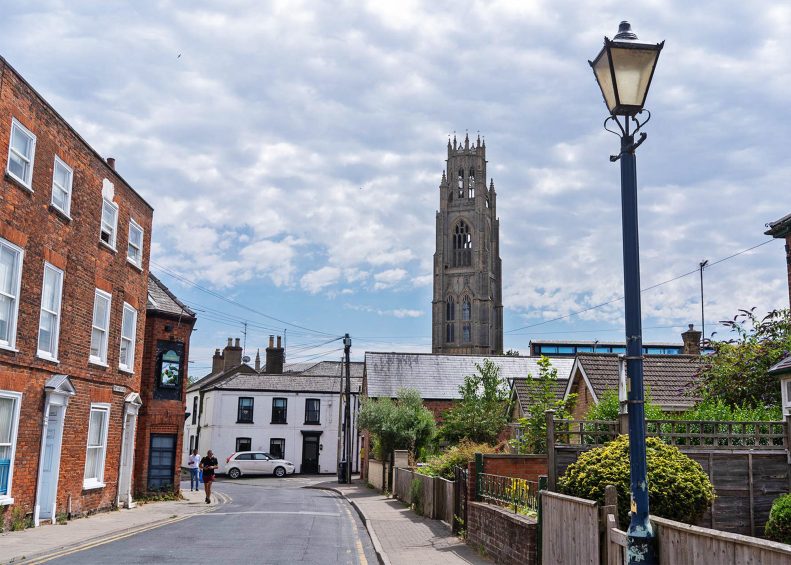
But its major landmark, completed in 1520 and dominating the horizon, is the 272-foot tower of St Botolph’s Church, known locally as The Stump. If you’re in the area at the right time, a drink and slice of cake from the Stump Coffee Shop after a tour of the church is a great way to learn about the town’s tales and fables. But be sure to book in advance, as it is not always open.
The streets here are a jumble of photogenic buildings that span the centuries, many in need of attention, but all with a story to tell.
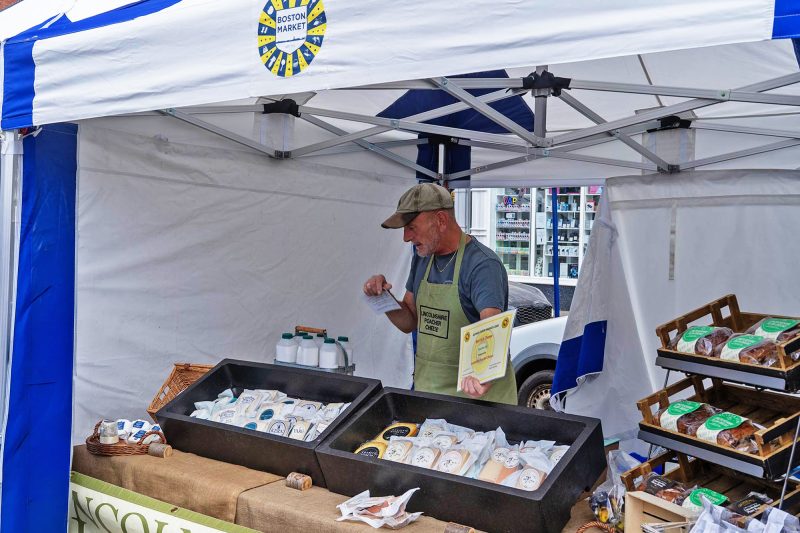
Boston is a destination; you don’t just happen upon it; it’s not on the way to anywhere, and it’s not easy to get to. It’s an ideal place to spot inland waterway boats in all shapes and sizes, because if you’re on a canal boat, it’s at the end of the River Witham and the only jumping-off point for crossing the Wash…
If you like our content and would like to support us, we will give you ad-free access to our videos before they go live to the public, discounts in our shop, access to Jamie’s iconic full-res photographs, and supporter-only blog posts. Click our ugly mugs for more info!